11 hr
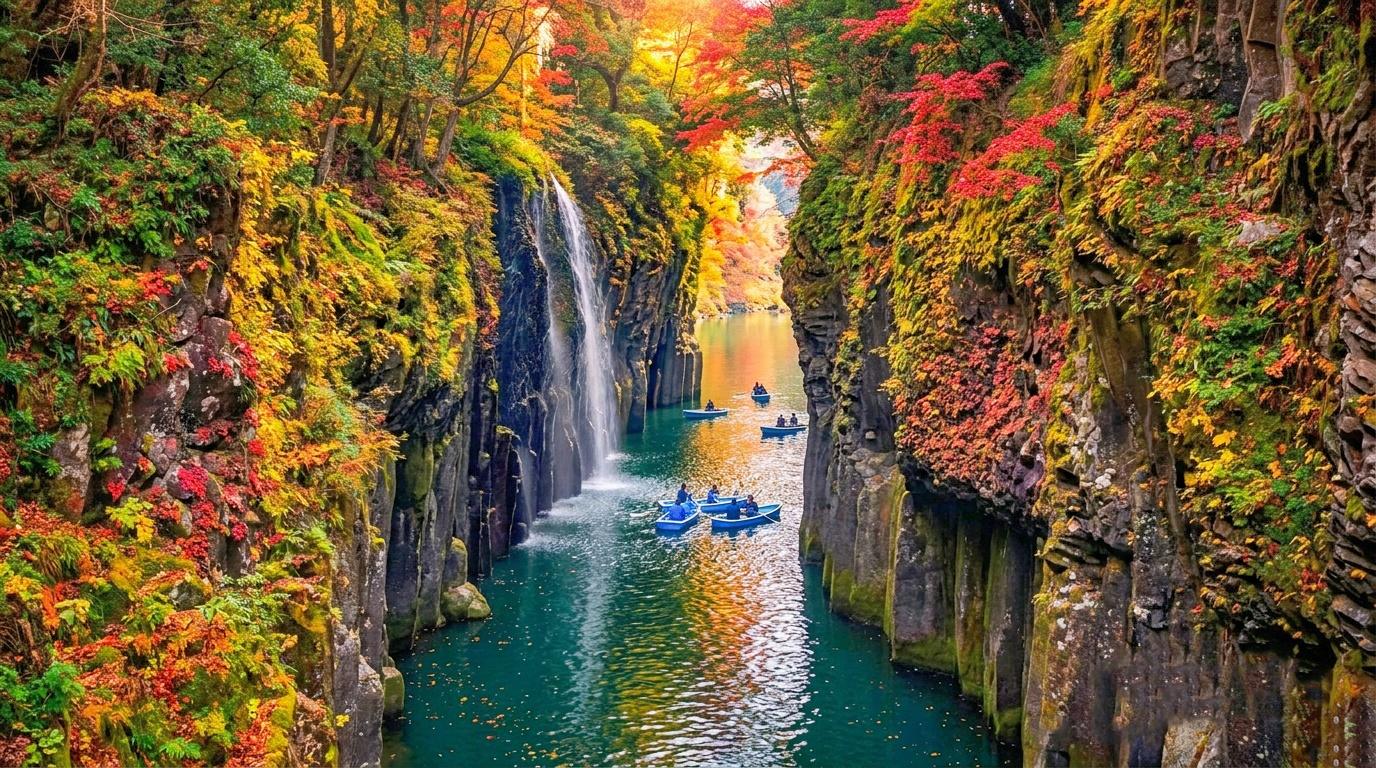
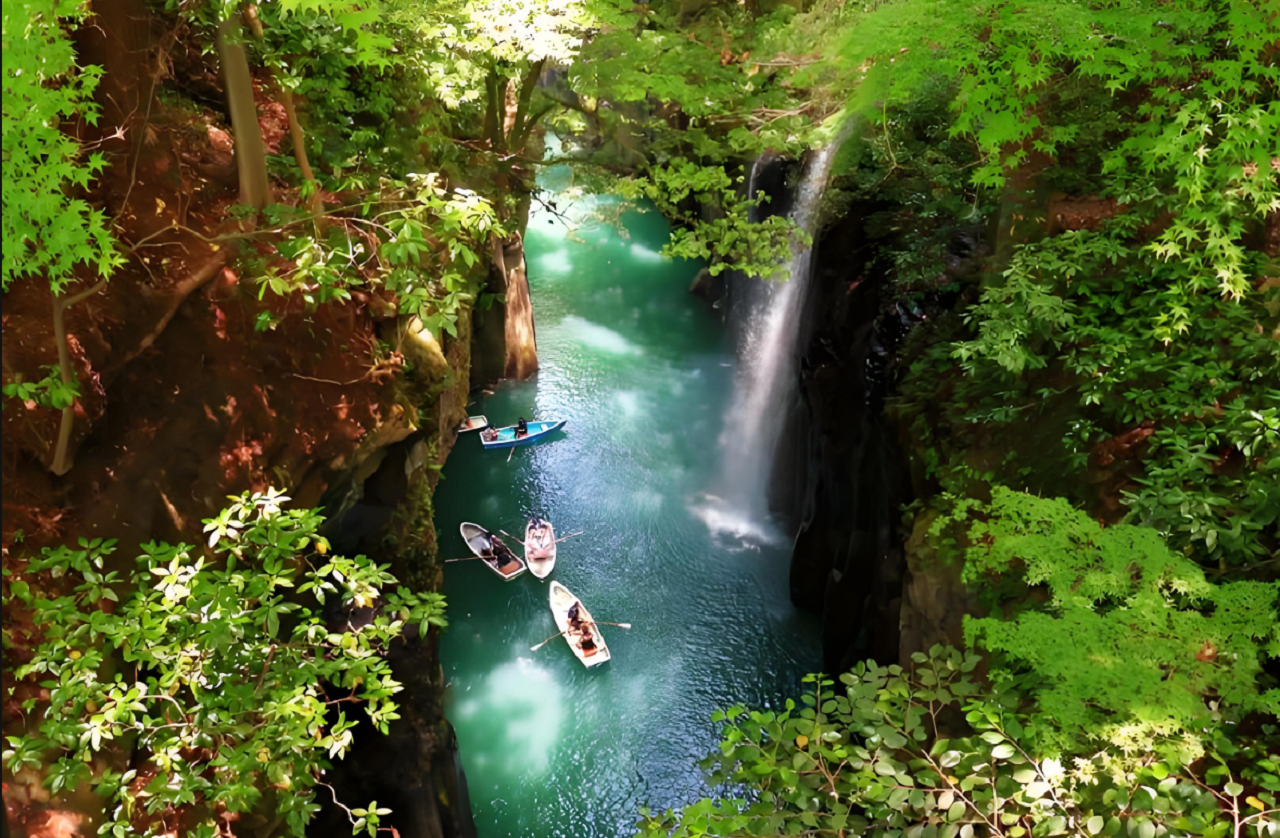
Takachiho Gorge & Amaterasu Railway Day Trip
Journey deep into Kyushu's mountains to discover waterfalls, vintage rail rides, and sacred caves
Reserve
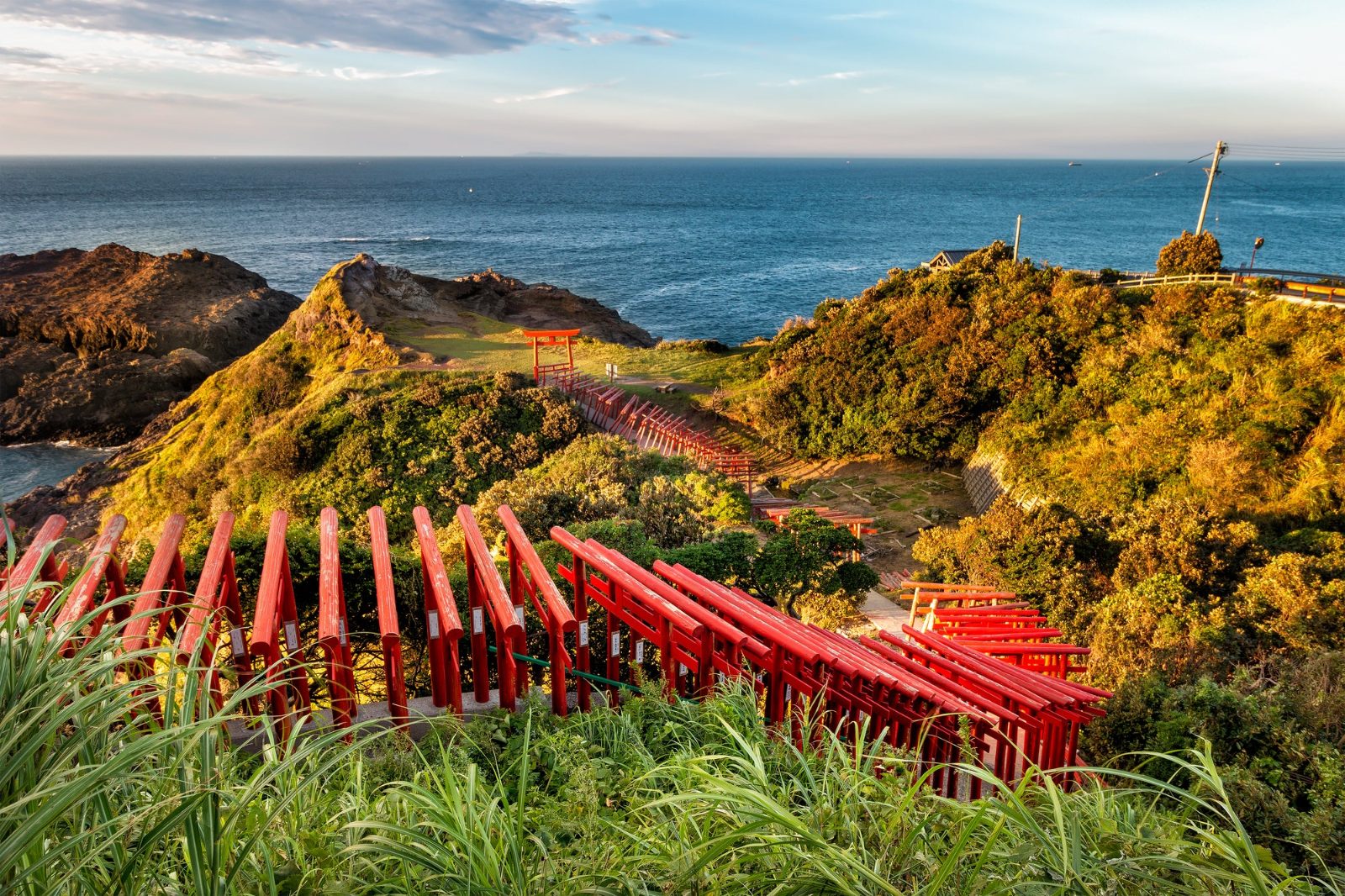
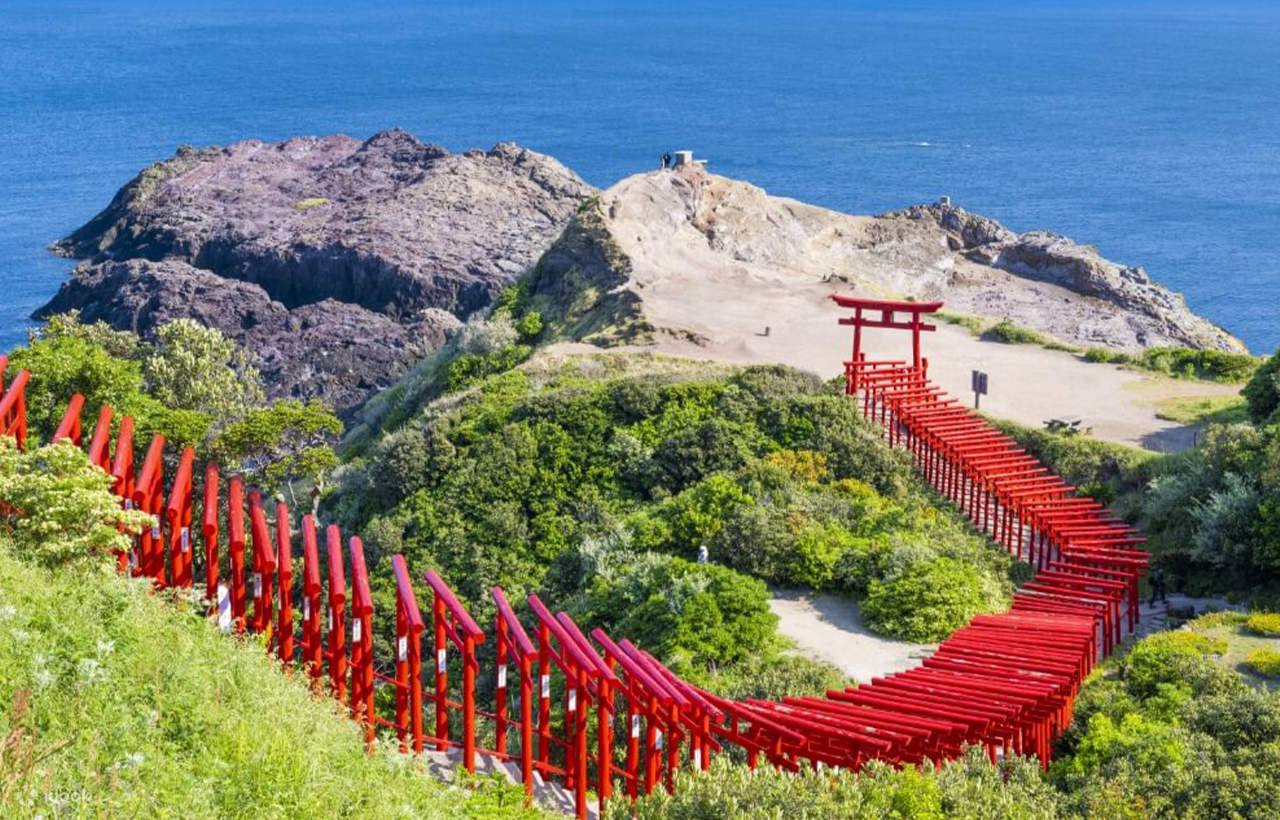
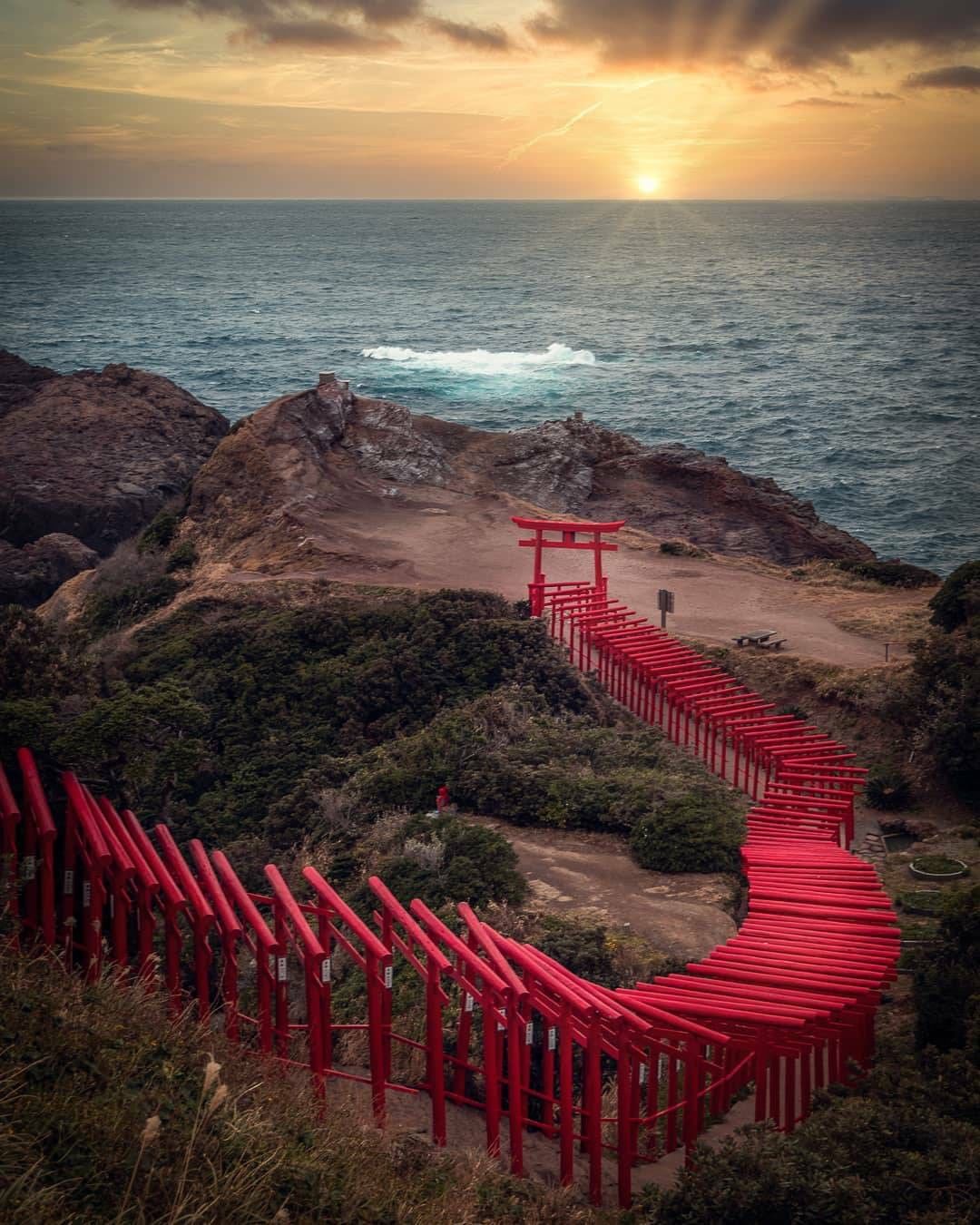
123 vermilion gates descend to the Sea of Japan, three hours west of the city
Hand-picked by our editors — only the best 4 experiences from 19 reviewed.
Verified partners for Motonosumi Shrine From Fukuoka tours, free cancellation where available, and instant confirmation on every booking.
11 hr
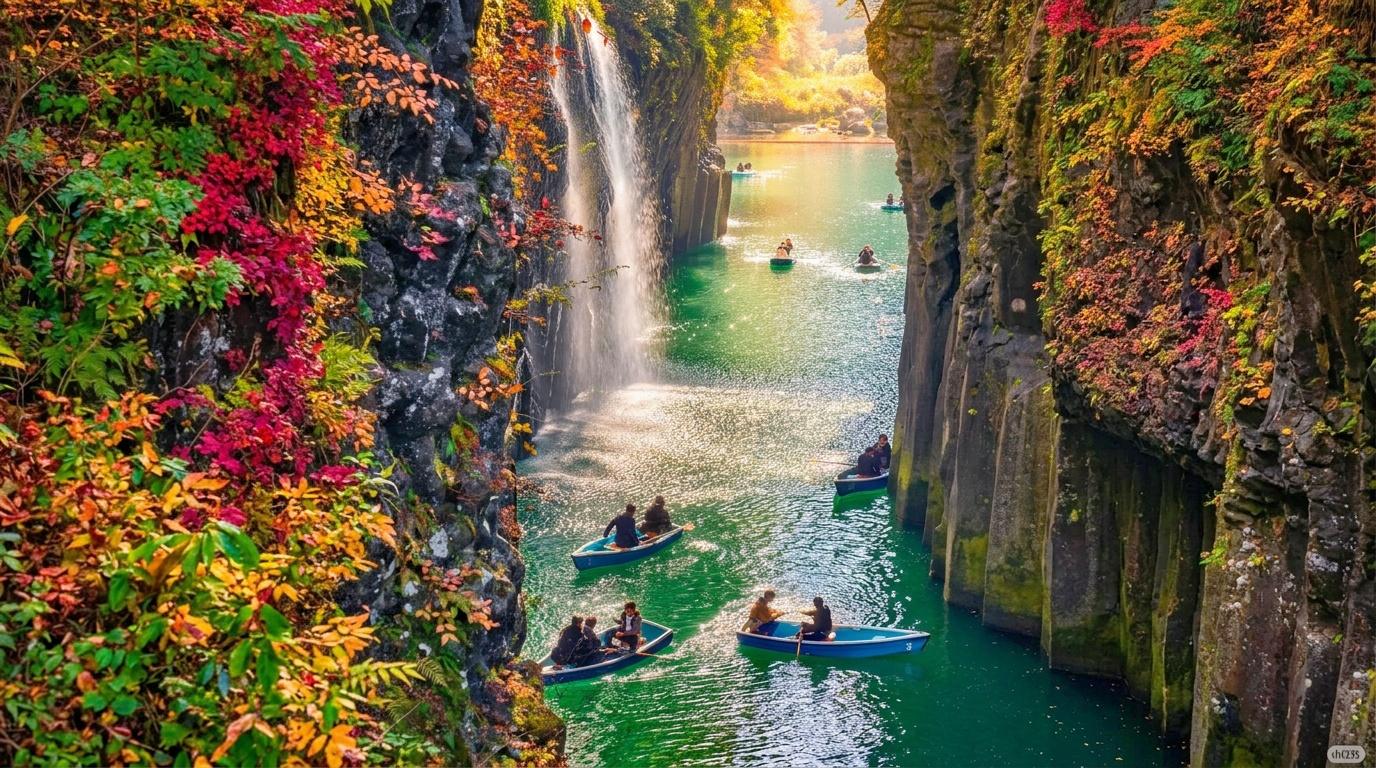
Journey deep into Kyushu's mountains to discover waterfalls, vintage rail rides, and sacred caves
Reserve
10 hr
Journey through Kyushu's volcanic peaks, rolling grasslands, and mystical canyon waterfalls on this full-day escape from Fukuoka.
Reserve
10 hr
Journey through ancient mythology and volcanic landscapes on a full-day adventure to Kyushu's sacred shrines and stunning gorge.
ReservePrices from verified partners. Availability updates in real time at checkout. Free cancellation policies apply where shown.
The landmarks, rooms, and views travelers on Motonosumi Shrine From Fukuoka tours remember — all visible on a single visit.
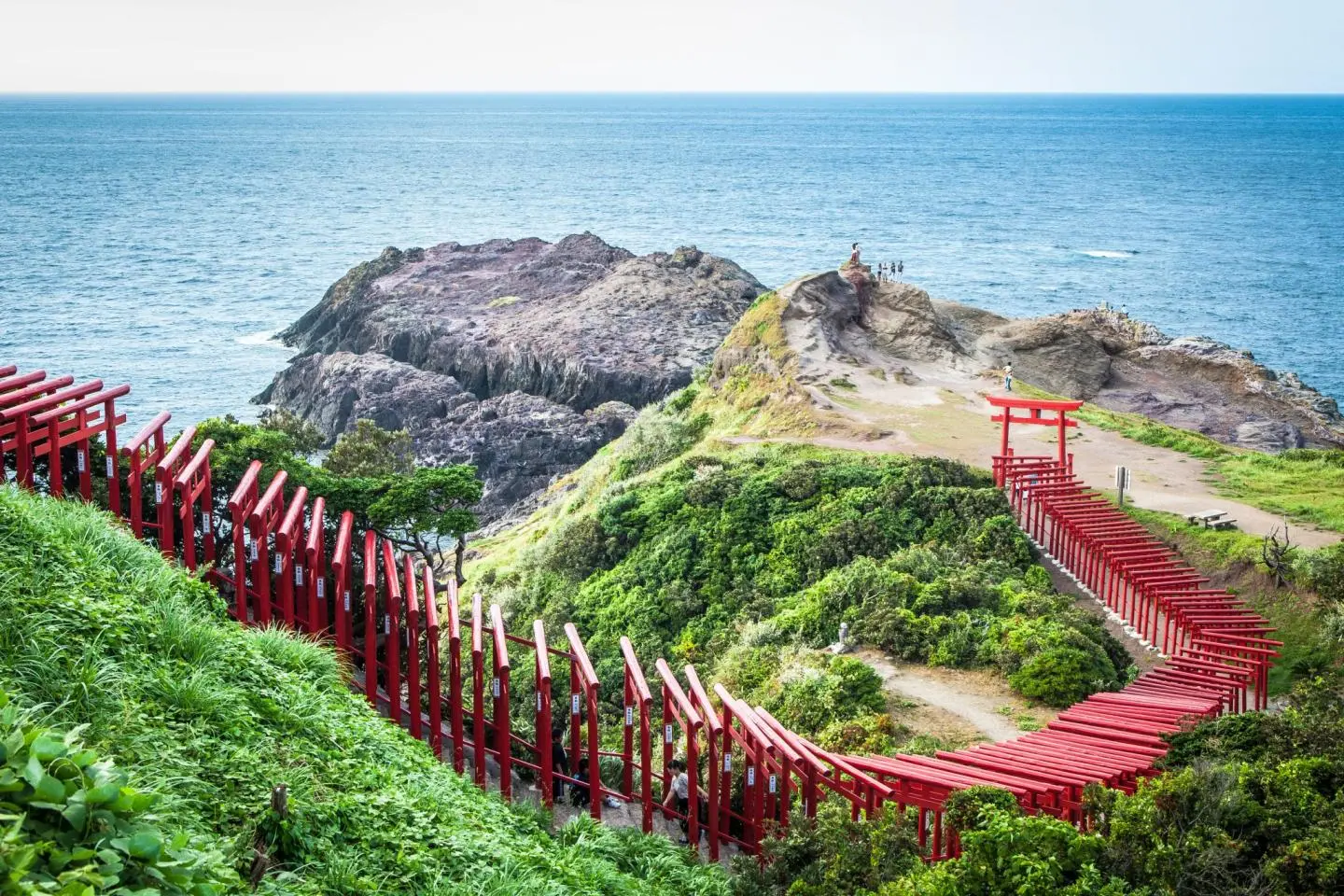
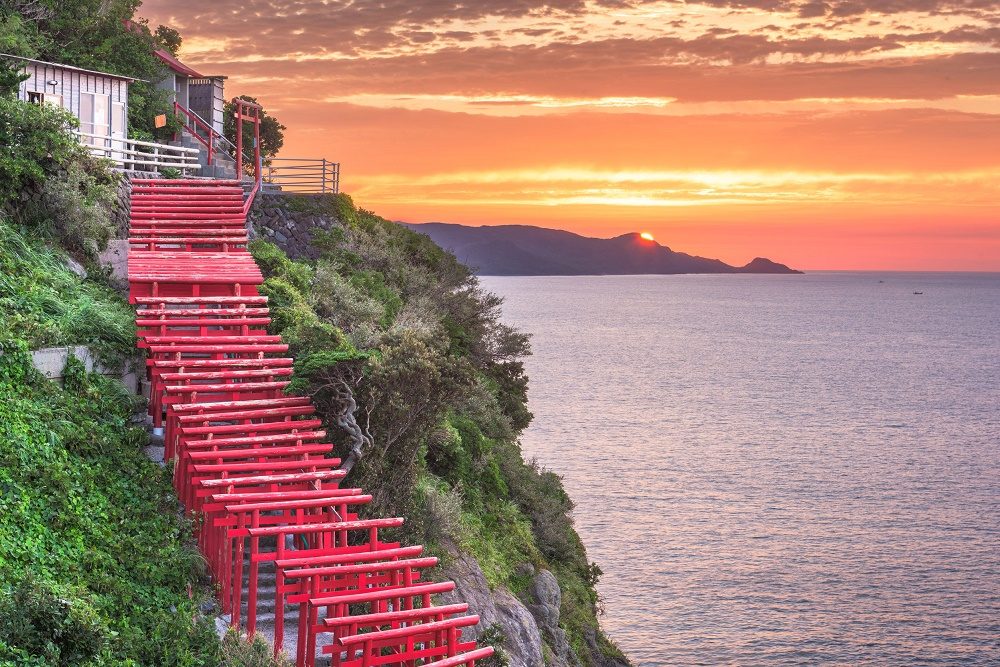
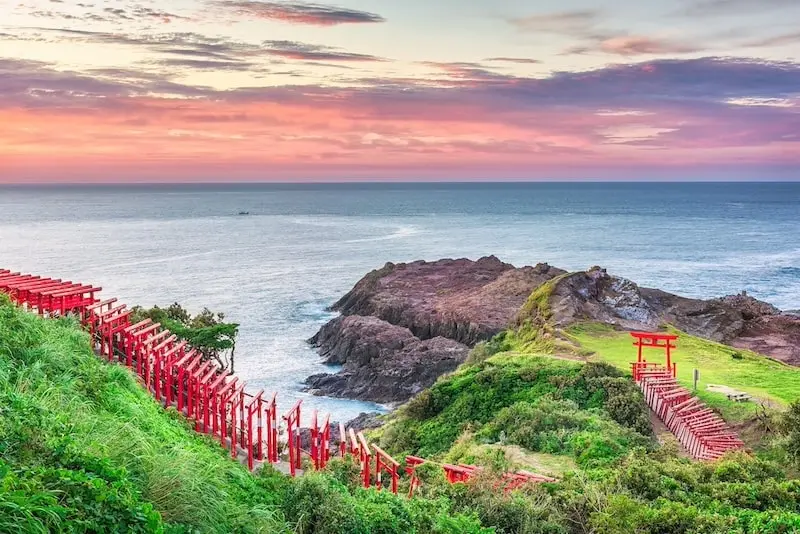
A stunning tunnel of gates leading from the hill down to the rocky coastline. These gates were donated over a decade, creating an iconic path for photos.
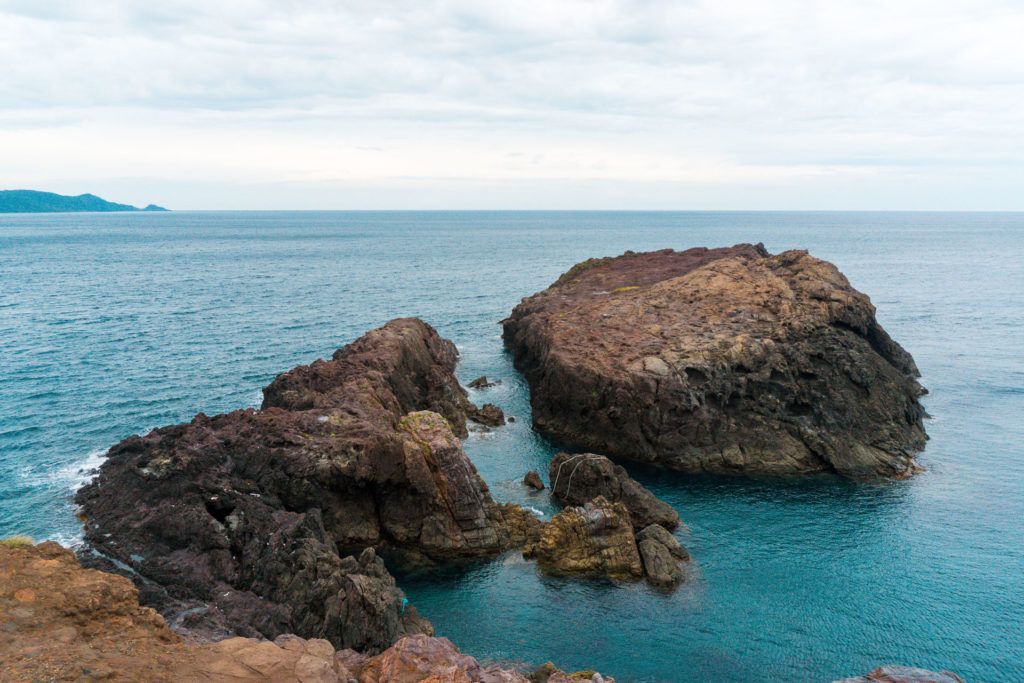
A natural phenomenon where waves crash into sea caves and spray water high into the air, resembling a dragon rising to the sky. It is a National natural monument.
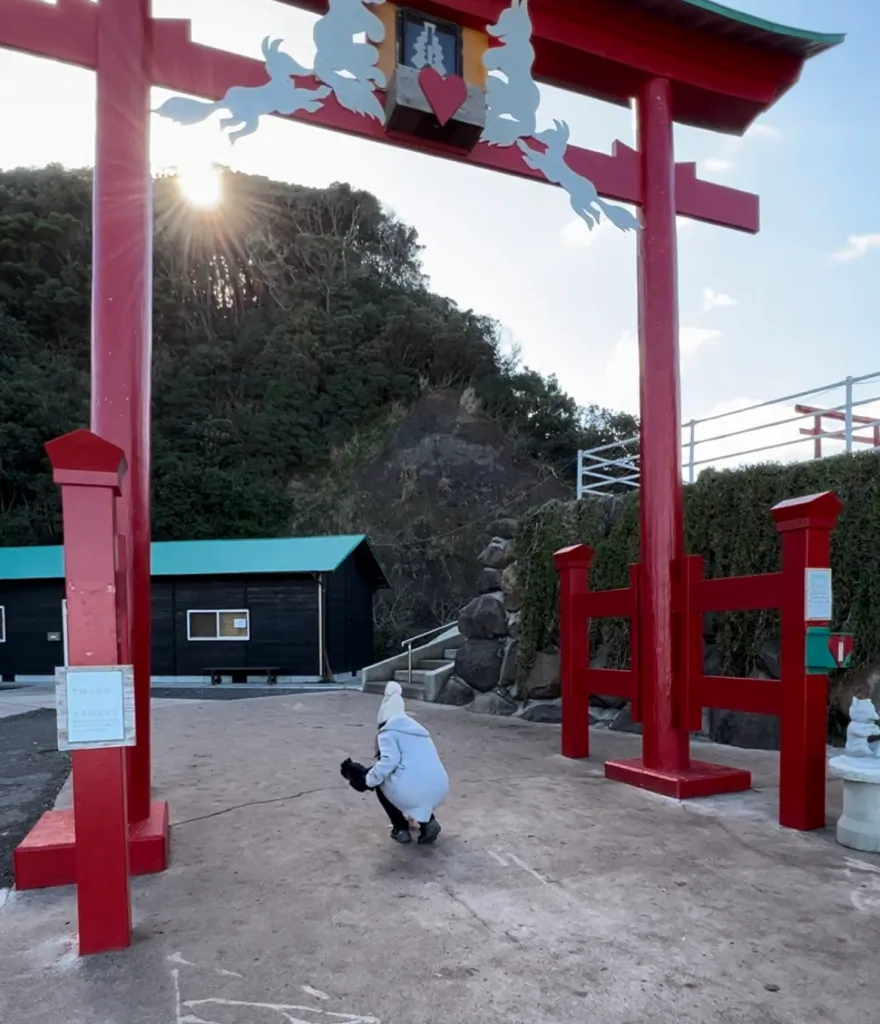
Located atop a 6-meter-high O-torii gate, this box is famous for being difficult to reach. Legend says a successful coin toss grants the thrower's wish.
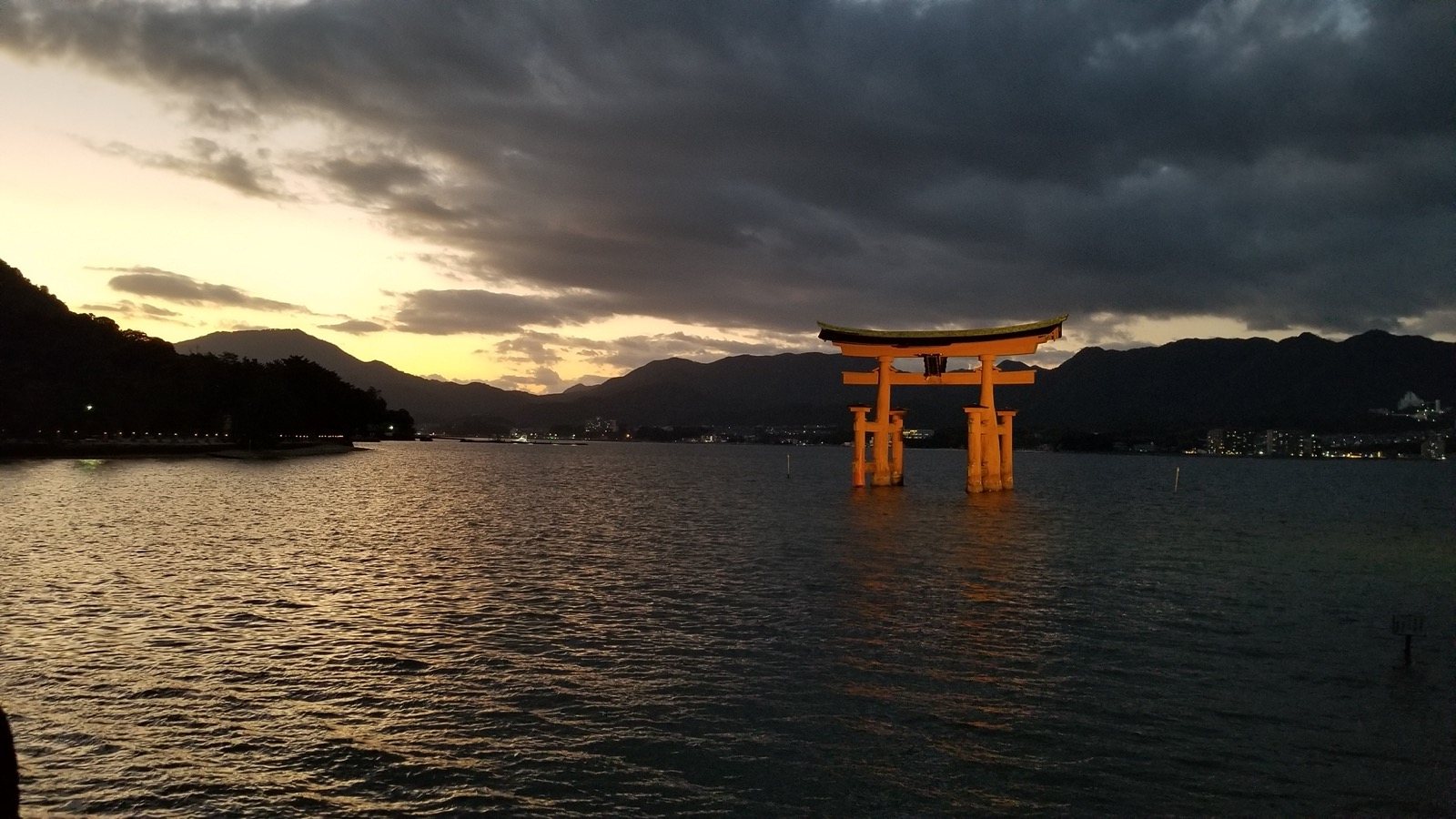
The massive 6-meter-high main gate that stands prominently at the entrance. It serves as a symbolic marker for the spiritual site and a popular gathering point.
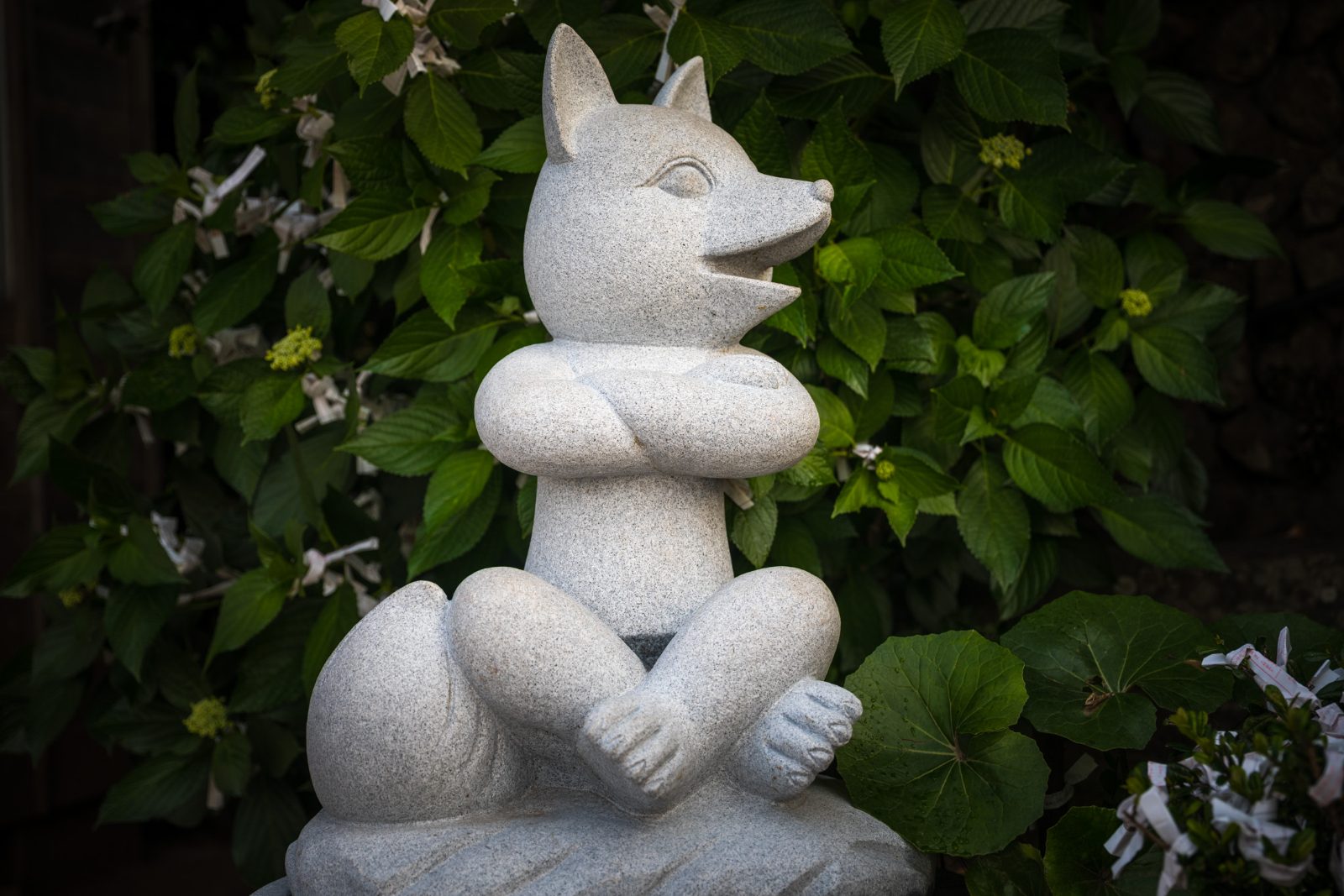
Small stone statues of foxes, considered messengers of the deity, placed throughout the grounds. They represent the spirit of the white fox from the founding legend.
Every Motonosumi Shrine From Fukuoka tour side-by-side — duration, what's included, how you redeem.
| Experience | Duration | Rating | Skip-the-line | Guide | Small group | Free cancel. | Price | |
|---|---|---|---|---|---|---|---|---|
|
Guided Experience Most popular
Takachiho Gorge & Amaterasu Railway Day Trip
|
11 hr | ★ 4.8 | ✓ | ✓ | ✓ | ✓ | $49 | Book → |
|
Guided Experience
Mount Aso Volcano & Takachiho Gorge Day Trip
|
10 hr | ★ 4.7 | ✓ | ✓ | ✓ | ✓ | $48 | Book → |
|
Guided Experience
Miyazaki & Takachiho Gorge Day Trip from Fukuoka
|
10 hr | ★ 4.6 | ✓ | ✓ | ✓ | ✓ | $59 | Book → |
All prices from verified partners. Availability and exact terms confirmed at checkout.
They complement each other, yet most visitors planning a motonosumi shrine from fukuoka tour prioritize the shrine for its coastal visual impact, while Akiyoshidai offers a more expansive landscape experience.
| Feature | Top pick Motonosumi Shrine | Akiyoshidai Park |
|---|---|---|
Primary Appeal |
Vermilion torii gates | Limestone karst landscape |
Travel Time from Fukuoka |
3–3.5 hours | 2.5–3 hours |
Walking Difficulty |
Moderate incline | Easy to moderate |
Ideal Weather Conditions |
Clear coastal skies | Dry pleasant weather |
Photography Focus |
Shrine and sea | Panoramic grass plains |
Suggested Trip Duration |
1–1.5 hours | 1.5–2 hours |
| See tickets → |
Verdict: If you require motonosumi shrine from fukuoka tickets to ensure logistics, balance the visit with Akiyoshidai's geological vistas to maximize your day trip using various motonosumi shrine from fukuoka tours.
Choose your ticket, select your date, and reserve in under two minutes. Secure checkout handled by our verified partner.
Instant confirmation by email, with a mobile voucher you can save offline. No printing, no queuing at a collection desk.
Arrive at the entrance, show your voucher on your phone, and walk in. Most tickets include priority or skip-the-line access.
Practical details for Motonosumi Shrine From Fukuoka tickets straight from our verified partners — hours, access, rules, and how to get there.
Casual and comfortable clothing is recommended for navigating the outdoor paths. Sturdy walking shoes are essential as the approach to motonosumi shrine from fukuoka involves uneven terrain and incline.
There are no lockers at the shrine; guests should travel light. Keep belongings secure while walking the torii path at this famous Yamaguchi landmark.
Photography is permitted and highly encouraged, particularly of the 123 vermilion torii gates. Please refrain from using drones or flash photography that may disturb other visitors at this coastal site.
The site is not wheelchair accessible due to the steep slope and stone steps along the path. Visitors with mobility concerns may view the main gate area, but the full descent to the sea is challenging.
Mobile phones are permitted. Keep ringer off inside exhibition spaces.
Families are welcome, though the steep path requires supervision for small children. The site offers a unique visual experience that many younger visitors enjoy during day trips.
There are no dining facilities on the shrine grounds. Please bring water, especially if visiting in summer, or stop at nearby Nagato local eateries.
Pets are not allowed, with the exception of service animals with appropriate documentation.
Last entry is typically 1 hour before closing. Check the specific ticket for timing.
Best time to go, insider tips, nearby landmarks, and the cancellation fine print — flip through to skim what matters to you.
Flexible, no hidden fees.
As entry to the grounds of Motonosumi Shrine is 0 JPY (Free entry), there are no cancellation fees for site access. Third-party tour operators regarding motonosumi shrine from fukuoka tours may have independent policies, so please check specific booking conditions.
In 1955, a Nagato fisherman named Okamura Saiji reported a vision instructing him to install torii gates on the clifftop where foxes gathered at dawn.
What began as a handful of vermilion posts grew over five decades into 123 gates cascading down the grassy headland to the wave line, each donated by local families and businesses. The shrine's official name—Motonosumi Inari Jinja—honors the Inari deity of agriculture and prosperity, yet its remote location on the Yamaguchi coast kept it obscure until a 2015 CNN feature named it among Japan's most scenic destinations. Visitor numbers surged from 3,000 annually to over 200,000 within three years.
Motonosumi shrine from fukuoka lies 180 kilometers west along the Sanyo Expressway, a three-hour drive through mountain tunnels and fishing villages that see few foreign travelers. The site occupies a narrow plateau where the Chugoku Range meets the Sea of Japan, and on clear days the cobalt water stretches unbroken to the horizon. The torii corridor begins at the clifftop shrine building and descends in a straight line toward the surf, each gate spaced two meters apart. At the lower terminus, waves strike a sea-sculpted rock formation known as Ryugu no Shiofuki—Dragon Palace Blowhole—where compressed air and seawater erupt in geysers during high tide.
The approach from the parking area requires a steep climb up a concrete path with no handrails, and the shrine's offertory box sits atop a five-meter post, forcing visitors to toss coins upward through a narrow slot. Local belief holds that a successful throw grants a wish, though the box's height means most coins clatter back onto the stone pavement. The clifftop shrine hall, rebuilt in 2017 after typhoon damage, houses a single tatami-mat worship space and a wooden fox statue polished smooth by decades of rain. Behind the hall, a maintenance shed stores replacement torii crossbeams and pots of vermilion paint used for annual touch-ups each November. The site closes at 16:30 daily, and the caretaker locks the parking gate within ten minutes of that hour, stranding late visitors until dawn.
"123 vermilion gates cascade down the grassy headland to the wave line, each donated by local families over five decades."
A step-by-step walkthrough of Motonosumi Shrine From Fukuoka tickets — what you'll see, how long each stage takes, and the details that matter.
You reach the parking area after three hours on the expressway, the final kilometer winding through terraced fields and fishing shacks. The clifftop appears suddenly—a red corridor suspended between sky and surf, the Sea of Japan spread cobalt-blue below.
You climb the concrete path from the lot, each step steeper than the last, and emerge at the upper shrine hall where a wooden fox statue guards the tatami-mat worship space.
You walk through the torii tunnel, the gates framing successive slices of ocean and rock. Halfway down the slope you pause to photograph the Dragon Palace Blowhole as a wave strikes and a white geyser erupts from the stone. The wind carries salt spray and the sound of gulls circling the headland. At the clifftop shrine you try the offertory toss—your coin arcs upward, strikes the post, and clatters back onto the pavement. You try twice more before one clinks into the box.
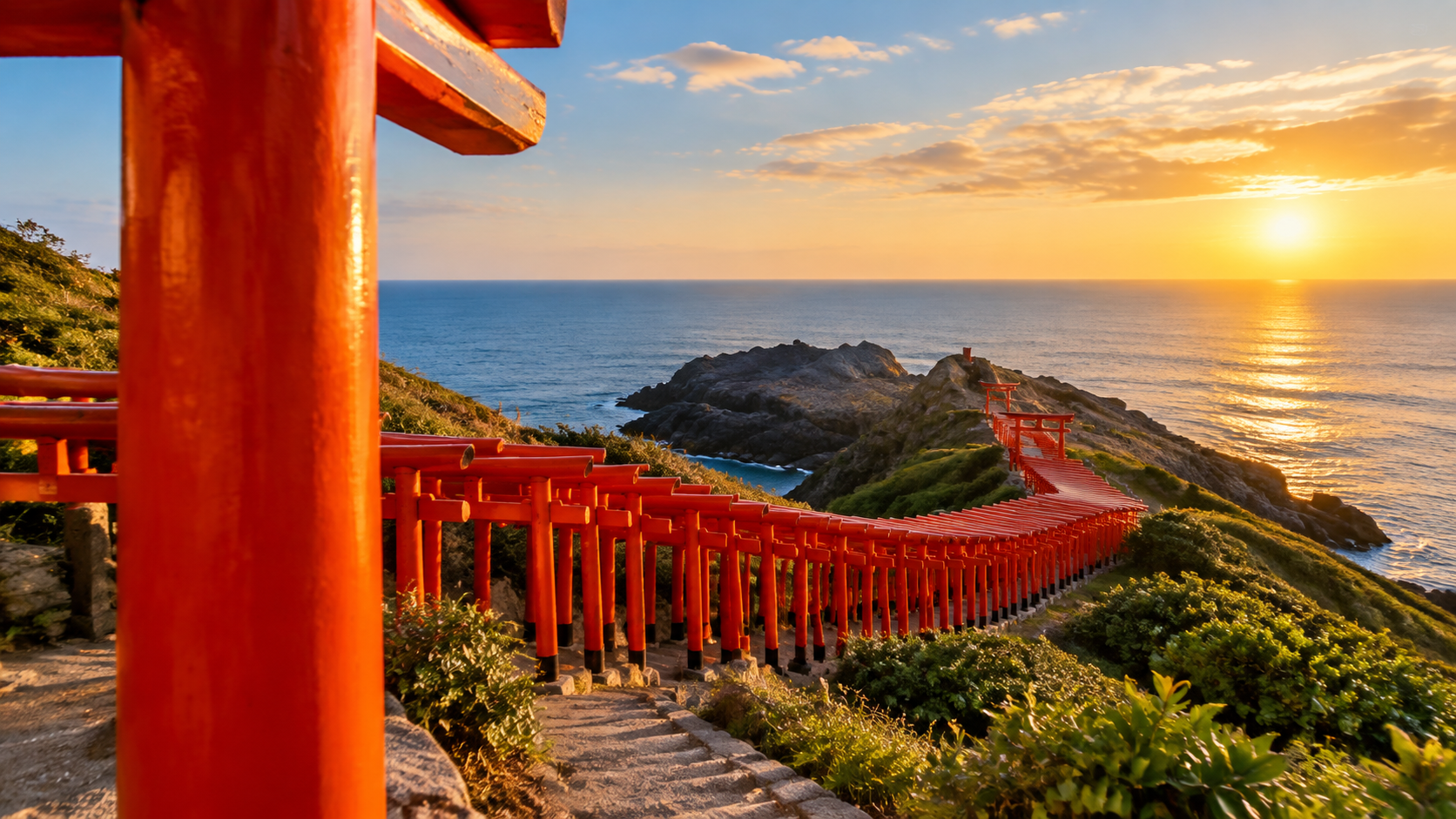
By 16:00 the light turns golden, painting the vermilion posts amber against the darkening water. You retrace your steps through the torii corridor as the caretaker begins closing the site, the parking gate locking at 16:40.
Entrance to Motonosumi Shrine is 0 JPY (Free entry).
The shrine is open daily from 09:30–16:30.
There is no direct public transport; we recommend joining organized motonosumi shrine from fukuoka tours or renting a car.
We recommend the 09:30–16:00 arrival window to avoid crowds and maximize daylight for your motonosumi shrine from fukuoka visit.
Access to the torii path can be restricted during extreme weather or busy periods at Motonosumi Shrine.
A typical visit to Motonosumi Shrine lasts about 45 minutes.
Yes, there are designated parking lots available for 300 JPY for the first hour.
Photography is permitted, but please be respectful of other visitors while capturing your motonosumi shrine from fukuoka memories.
There are no entry tickets for Motonosumi Shrine itself, though motonosumi shrine from fukuoka tour packages may include transportation.
Yes, families can visit, but the steep path at Motonosumi Shrine is challenging for those with limited mobility.
The shrine was established in 1955 following a vision of a white fox experienced by a local fisherman.
Yes, visitors often explore the Ryugu no Shiofuki geyser nearby while at Motonosumi Shrine.